
When we were in Las Vegas last month, we went to the King Tut Exhibit at the Luxor.

We had no idea what to expect, but it was an incredible exhibit that follows the footsteps of famed archeologist Howard Carter. He uncovered the lost tomb of Tutankhamun in the early 1920s.
The exhibit takes visitors on the path of Howard’s discovery, exploring recreations of the inner chambers he found, the treasures within, and the young pharaoh’s mummy.
Howard Carter dreamed of going to Egypt and uncovering its lost treasures from the time he was a young boy. After years of searching for a big discovery, he happened upon the doorway to the tomb of King Tut in 1922. Through letters and telegrams he wrote, and his partnership with Lord Carnarvon who footed the bill for the excavation, the exhibit takes visitors back to the moment when they discovered the tomb.
The experience explores the tomb and a recreation of the burial chamber that held the shrines, sarcophagus, and nested coffins that protected the mummy.
Kings were considered the intermediaries between the Egyptian-worshipped gods and people. They were tasked with keeping harmony and balance, and often served more than one god, the most important being the sun god, Ra (also known as Amun-Ra). The exhibit included information about the gods most important to them and their roles in Egyptian mythology.

These are the nested coffins, all so elaborate. The people back then believed the soul was connected to the body, even after death. Mummification was done to preserve the body so the soul could live on in the afterlife.
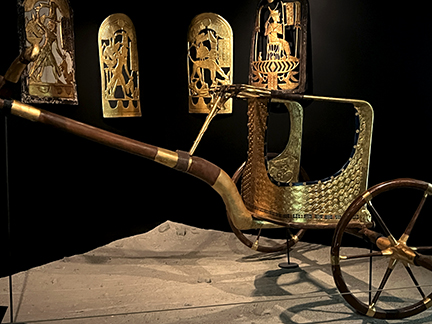
The exhibit included information about the mummification process, and the soul’s trip through the underworld.
The tomb abounded in gold, the symbol of immortality. There were a plethora of artifacts and details about how so much gold was acquired and used by the ancient Egyptians.
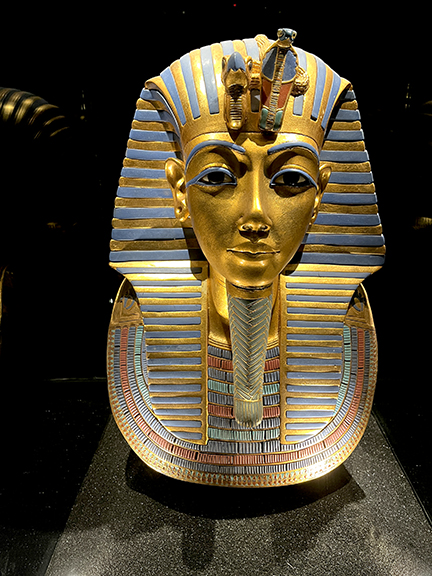
Recreations of the finest examples of art found in Tut’s treasury, including a canopic shrine, incredible statues, and the nested coffins made from gold and precious minerals are all part of the display. The most well-known piece is likely Tut’s iconic death mask, considered a masterpiece of Egyptian art.
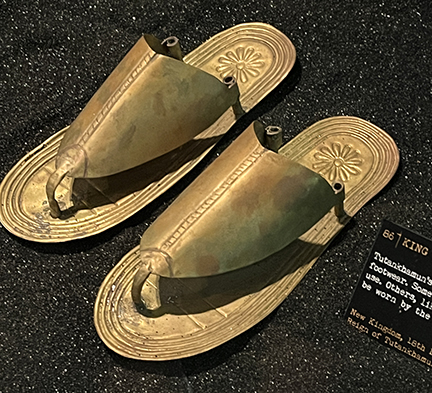
One of the things that amazed me were these shoes made of gold. Not the gold part, but the design. They look so much like modern shoes. I was really surprised by that.
The exhibit also included information details about the Nile, and how it impacted ancient Egypt. It’s the longest river in the world and historians say without it, Egypt would not have existed.
Also, the exhibit had a section about the influence of the discovery of King Tut’s mummy. The 1920s featured many Egyptian details in architecture and decor. Truly, his discovery took the world by storm, with Hollywood fully embracing the story. Tut remains the most popular pharaoh.
I knew he’d been young when he was king and when he died, but artifacts found in his tomb share the story of a crippled youth in bad health with high aspirations. It was fascinating to learn more about the boy behind the legend, and the harsh and painful realities he endured.
If you don’t ever plan to travel to Egypt, this exhibit really is a fabulous way to experience some of the wonder of King Tut’s tomb.

One Response
This is a great article! I saw King Tut’s exhibit in Los Angeles in the 1970’s. What interested me then were the scarubs or beattle looking gold sculptures and the necklaces. Amazing detail!