
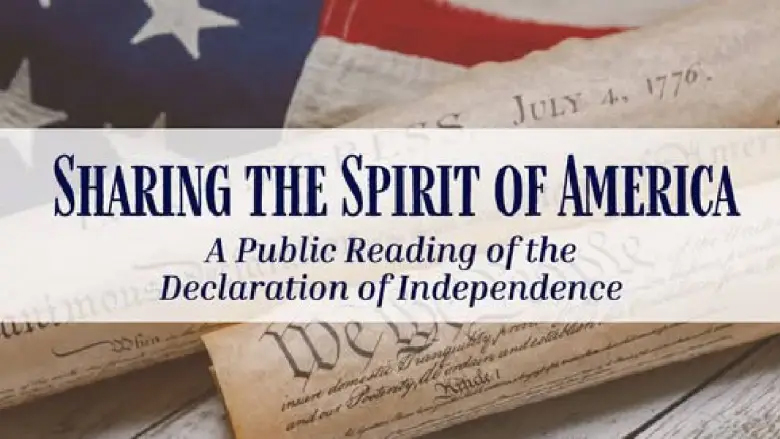
At 6 p.m. today (EDT), every state in America, along with 20 countries, will join in a simultaneous reading of the Declaration of Independence to celebrate the 250th anniversary of when the words were read in public for the first time on July 8, ,1776 in Philadelphia.
I wish I could travel back in time and be there to hear it read. To feel the excitement that had to have been pulsing through the crowd.
That day, the air was thick with summer heat, the streets busy with carts, horses, shopkeepers, apprentices, farmers, and families. Along High Street, the market would have been humming with life. Baskets of produce, fresh bread, wheels of cheese, fish from the river, and flowers from nearby gardens fill the stalls. The Delaware waterfront would have been crowded with ships, their masts rising against the sky, while the scent of tar, rope, fish, and molasses drifted from the wharves.
It might have seemed like an ordinary summer day in the busiest city in the colonies.
But it was not ordinary at all.
Just days earlier, on July 4, the Continental Congress had adopted the Declaration of Independence inside the Pennsylvania State House (known today at Independence Hall). The words had been debated, edited, approved, and sent to be printed. Now, on July 8, the people of Philadelphia would hear them publicly read aloud for the first time.
Bells began ringing to summon citizens for the reading. At noon, a crowd gathered in the State House Yard. Men and women, children and apprentices, tradesmen and soldiers, merchants and servants likely pressed close, eager to hear what Congress had declared. Some may have already heard rumors. Others may have known only that something momentous was about to happen.
Then Colonel John Nixon stepped forward and read the Declaration of Independence.
For the first time, ordinary citizens heard the bold words that announced the colonies were no longer subject to the British Crown. The Declaration gave voice to an astonishing idea — that a people had the right to govern themselves, that liberty was worth sacrifice, and that a new nation was beginning.
Can you imagine what it must have felt like to stand in that crowd?
Some listeners surely cheered. Some may have wept. Some may have been afraid. Loyalists and British spies were likely angry.
The decision for independence was not a small or easy thing. War had already come. Families were divided. Soldiers were marching. The British army remained a very real threat. To support independence was to step into uncertainty, and for many, danger.
Yet in that moment, the words were no longer confined to a meeting room or a printed page. They belonged to the people.
After the reading, bells rang through Philadelphia. Their sound carried over rooftops, down cobblestone streets, through open windows, and across the busy market. They rang for liberty, for defiance, for hope, and for a future no one could yet fully imagine.
Shops opened, wagons rolled, horses stamped, and conversations spilled from doorways. A goldsmith might have paused at his workbench. A mother might have gathered her children close. A young soldier might have lifted his head at the sound of the bells and wondered what would be required of him next.
I think one of the most fascinating things about that day is that history began to unfold in the middle of ordinary, every day life. Yet there was nothing ordinary bout those who pursued liberty with every ounce of courage they possessed.
For the characters in For Liberty and Love, this moment is more than history. It is the world they live in. Lucy Carlson, a goldsmith’s daughter with a brave heart, and Branch Barton, a Continental soldier with secrets of his own, are caught in a time when trust is fragile, courage is costly, and love may be the greatest risk of all. And in Theo and the Day the Bells Rang, we get to see that momentous experience through the eyes of a little boy.
July 8, 1776, reminds us that liberty was not merely written into existence. It was spoken, heard, questioned, celebrated, feared, and carried forward by ordinary people who chose to believe in something greater than themselves.
And on that summer day in Philadelphia, as Colonel Nixon read the Declaration and the bells began to ring, the sound of freedom echoed through the city.
It still echoes today.
If you have an opportunity, I hope you’ll listen in to one of the many readings of the Declaration of Independence.
